Motorq’s Next Era: From Dashboards to Decisions
Cut hardware costs by securing OEM-direct data at the factory.
When my co-founders and I started Motorq, we set out with a simple idea: make it easy for businesses to talk to cars without installing extra hardware. At the time, only a handful of automakers supported that kind of connectivity. As more of them built out the capability, a major problem emerged: every OEM spoke a different digital language. They used different data structures, reported at different frequencies, and had different ways of handling driver consent. If you ran a fleet, a lending operation, or a dealership, getting basic information out of a car meant navigating a unique maze for every automaker.
We built Motorq around the idea of “give us your VIN and consent, and we'll get you the data.” With no hardware to install, you could talk wirelessly to your vehicles within minutes.
That turned out to be a massive engineering challenge. We spent the better part of a decade building direct integrations with 12 global automakers and the infrastructure to turn streams of inconsistent signals into something that our customers found useful and valuable.
We built the "easy button" for vehicle connectivity.
This is a huge milestone, but it was never our final destination. It was just the foundation.
Our Next Era: AI Applications for Commercial Vehicle Management
In my customer conversations, one theme comes up constantly: while getting data is the first step (and Motorq helps here), they worry about making sense of it all.
Across all the technology systems they use, their teams are spending hours pulling reports, cross-referencing fault codes, and stitching together spreadsheets. It takes too long. Critical signals are overlooked, cost saving opportunities get missed, and by the time someone finishes their data analysis, the right moment to act has passed.
They tell me that they don’t need more data or another dashboard. They need answers.
We call that Connected Vehicle Intelligence, and it’s driving Motorq’s next chapter. We are moving past only delivering consolidated OEM insights to delivering new applications that turn vehicle data into clear recommendations and workflow automation.
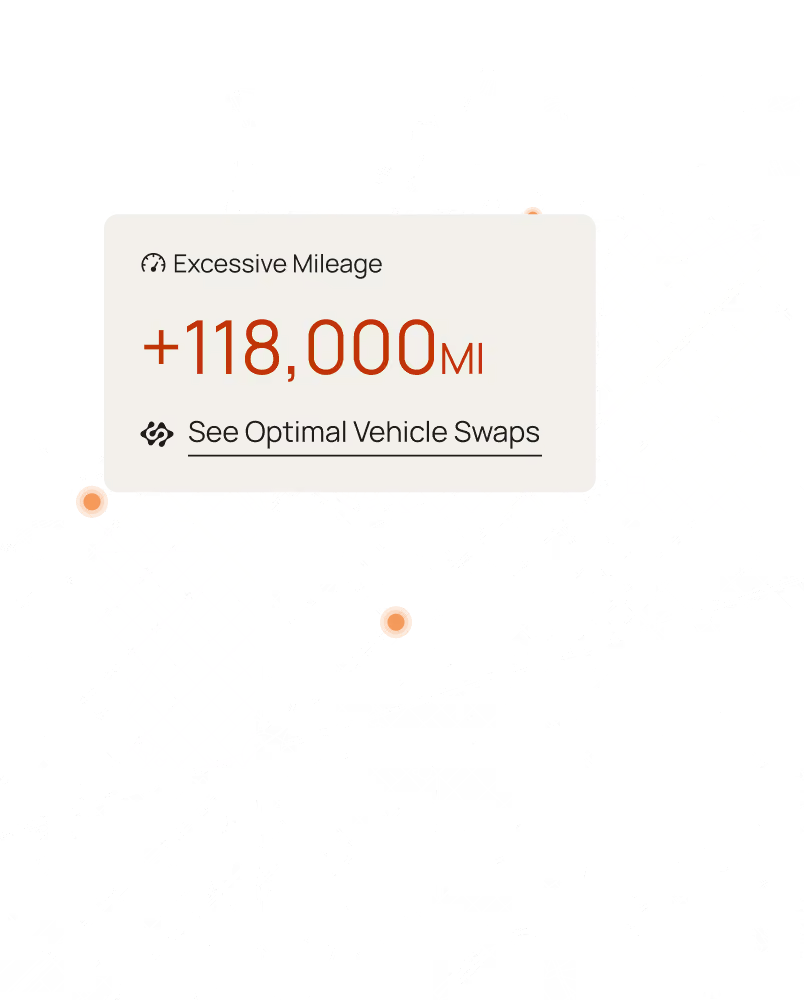
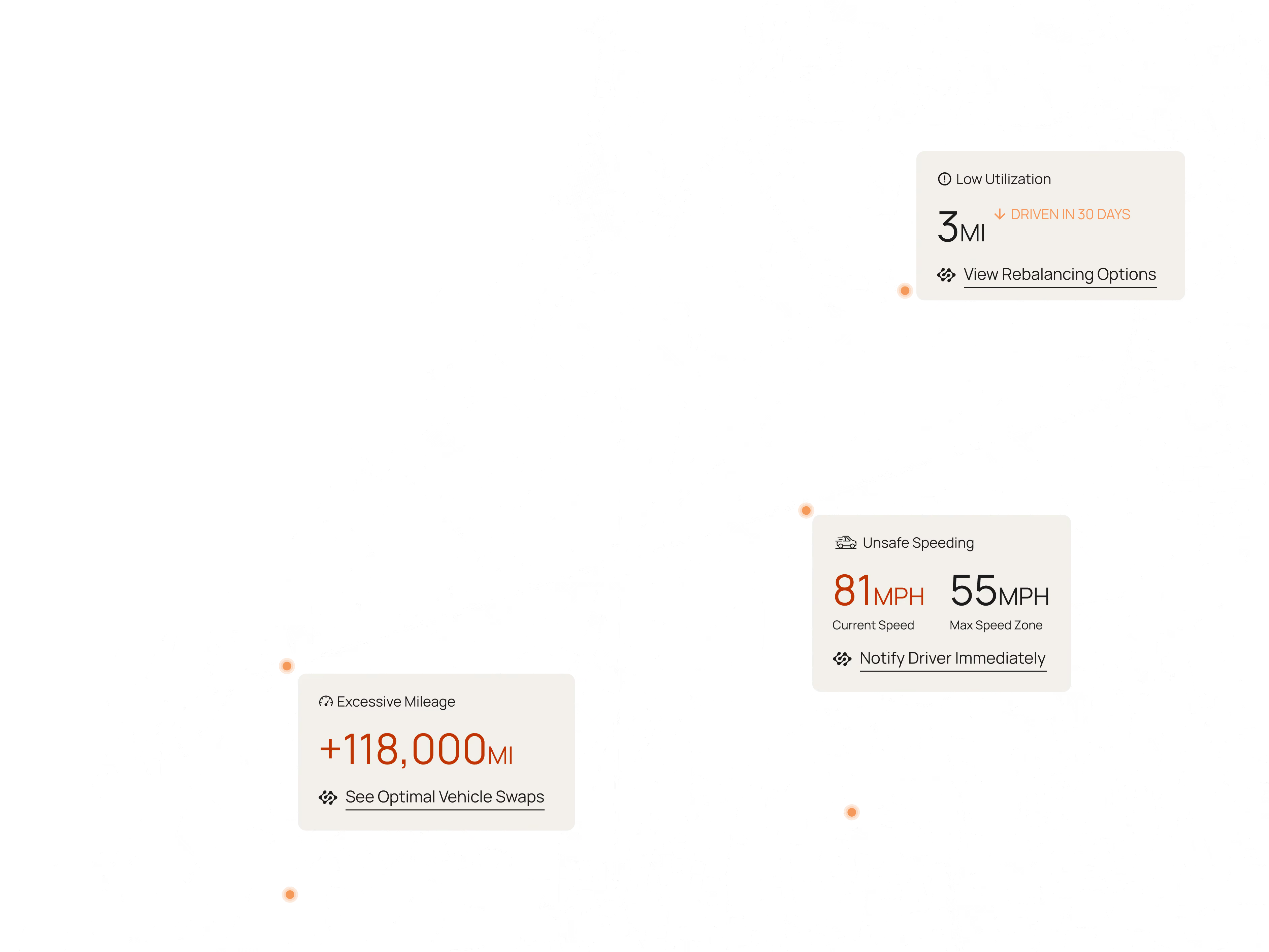
That's already shaping where we're focused and what we’re delivering: catching cost-saving opportunities before a fleet manager has to go looking for them, providing data-backed guidance on when to sell fleet assets, proving a vehicle's mechanical and battery health ahead of the auction block, and recovering defaulted or stolen vehicles in days instead of weeks.
Today, we’re launching our new brand identity and website to reflect this evolution. Our new site is built around a single focus: showing you how Connected Vehicle Intelligence moves your business from raw data to real outcomes.
Proving the Power of Connected Vehicle Intelligence
Our brand needed to change because our technology, and the value we deliver, has fundamentally changed. Over the past year, we've shipped the products — and built the team — that prove it.
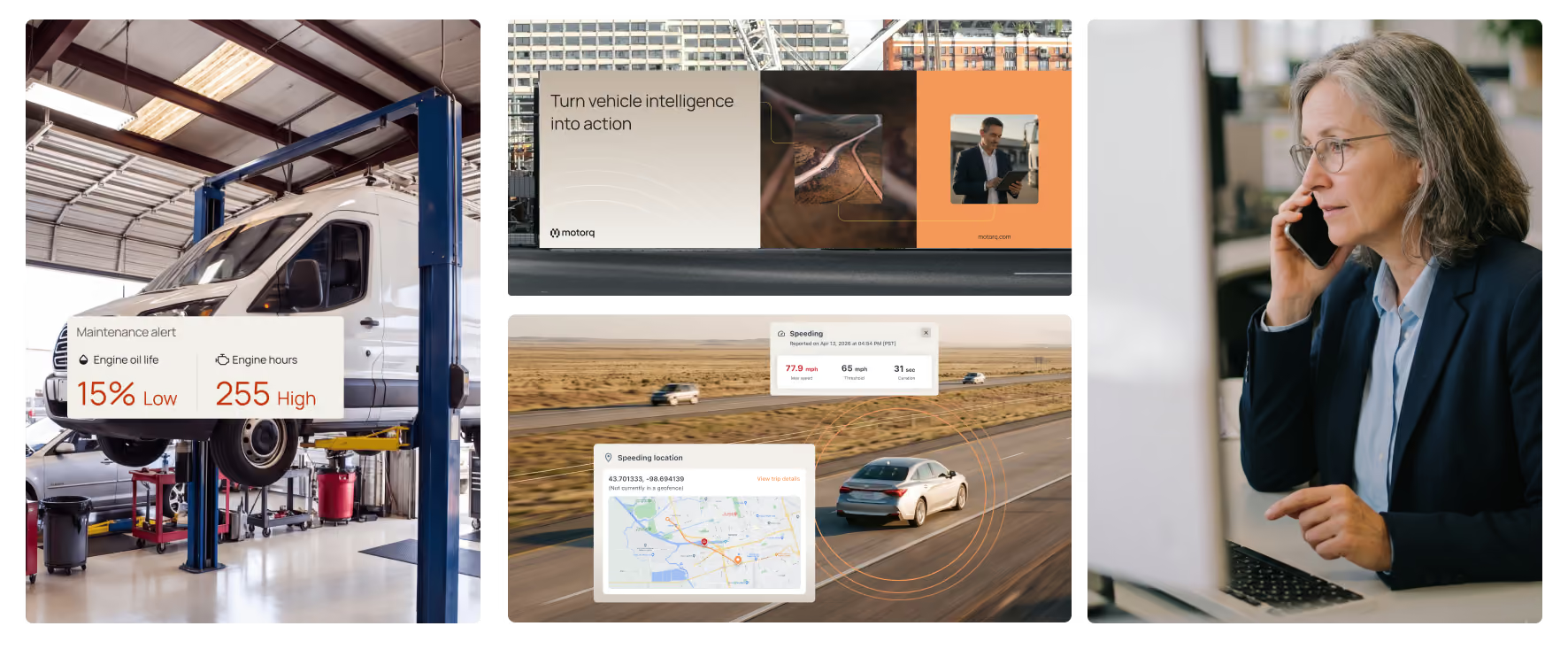
Fuse is our AI intelligence layer, powering two powerful capabilities. Our TCO Action Hub helps fleets improve total cost of ownership by automatically finding opportunities to cut costs with concrete recommendations and estimated cost savings. Fuse Assistant speeds up decision making, letting you ask questions in plain language and get answers in seconds. You can also use it to build a custom visualization across multiple datasets without waiting on an analyst to run a report.
We also built an asset recovery tool for lenders and fleet operators. With Vehicle Recovery Console, a recovery team can flag a vehicle, activate location tracking post-incident, and let machine learning predict where it’s most likely to be found. For one of our lending customers, it reduced median recovery time from 47 days to 15.
Getting this right takes someone who’s done it before. Earlier this year, Adi Bhashyam joined Motorq as President. Adi spent years building and scaling enterprise AI systems at C3 AI and advising large enterprises at McKinsey. I’ve known Adi for a while and what convinced me he was right for this moment was watching how he thinks about the gap between a good product and a product plus GTM approach that actually changes how a business operates. That’s the gap we’re closing right now.
What This Means for Our Customers & Partners
None of what I described above works without the OEM relationships we've spent nearly a decade building. Everything we’re building exists because of that connectivity, not instead of it. We are extremely grateful to our OEM partners for the technical and commercial support. Every new product capability we ship makes those integrations more valuable, and we intend to keep deepening them with existing partners and adding new ones.
To our customers: the products you rely on today aren't going anywhere. This isn't a rebuild. It's what happens when the foundation is solid enough to support something bigger.
Our mission is to deliver AI-powered software built on a strong foundation of OEM connectivity, business innovation, cutting-edge intelligence, and trusted human relationships. That’s not changing. What's changed is how much further we can take it now that the foundation is in place.
A Safer, Smarter, More Productive Road Ahead
The future of mobility depends on businesses acting on their data immediately, whether you're keeping a 1,000-vehicle fleet running smoothly, reducing risk on financed assets, or improving customer experience across dealer rooftops. Our job is to eliminate wasted time and ground every decision in what's happening in your business, right now.
We’ve made OEM connectivity easy. Now, we’re making commercial vehicle management smarter. I invite you to explore our new website, try Fuse for yourself, and see what it means to move from dashboards to decisions.

See what connected vehicles can do
Meet with a Motorq expert to discuss operational goals and see how connected vehicle intelligence can help.