Two Identical Trucks, One Big Problem: Why Good Maintenance Is Invisible at Auction
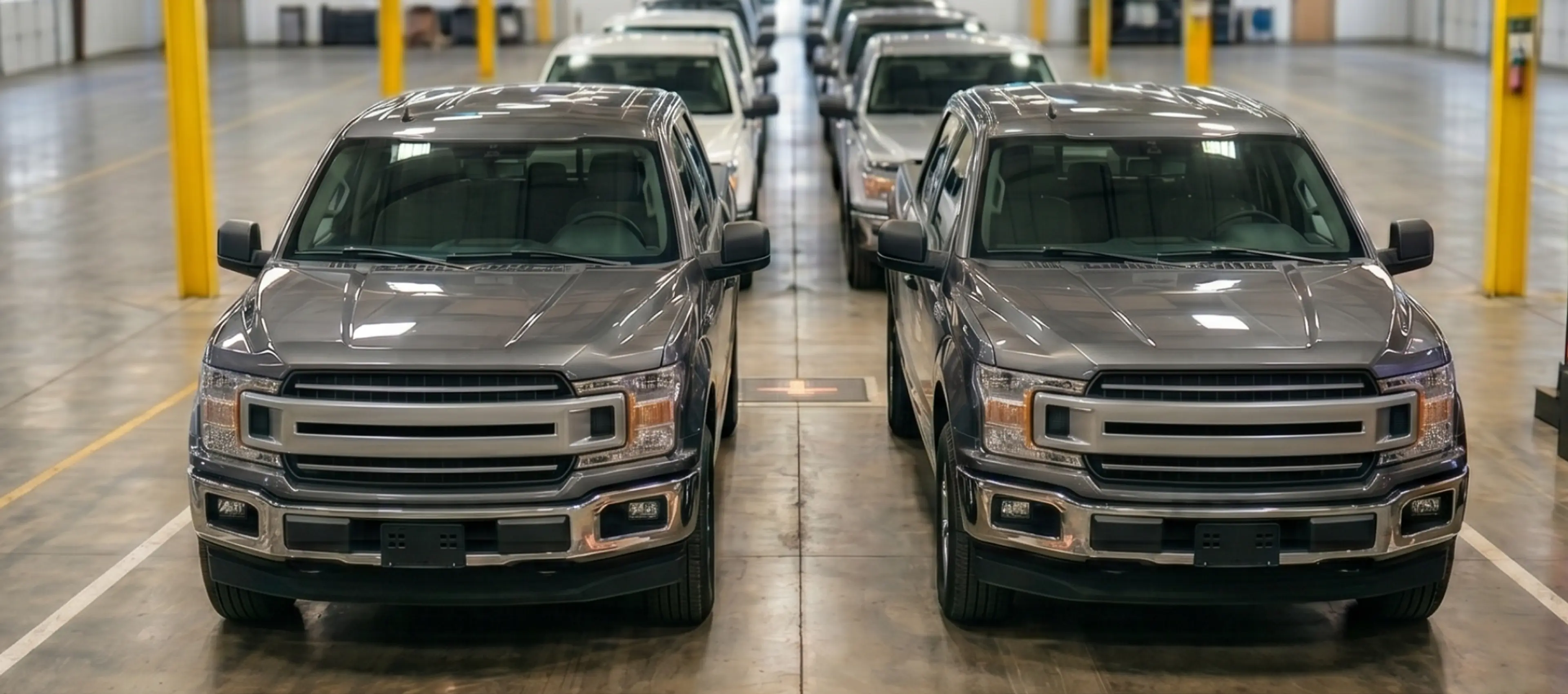
Here's a dynamic that plays out at auction lanes across the country every day: a well-maintained fleet vehicle and a neglected one roll across the block within minutes of each other. Same make. Same model. Similar mileage. Clean condition reports on both. Two pickups that look identical on paper but are mechanically opposite. We analyzed over 13,000 connected fleet vehicles, and the gap between them can be stark.
For fleets that did everything right, the reward is being priced the same as the ones that didn't.
Why does the market undervalue well-maintained fleet vehicles?
Condition reports and vehicle history reports have been the remarketing industry's primary evaluation tools for decades, and they serve a real purpose. They surface cosmetic damage, flag title events, and give buyers a baseline for what they're looking at. For the small percentage of vehicles with serious issues — flood damage, salvage history, major accidents — they're essential.
But condition reports tell you how a vehicle looks and if it had major damage. They don't tell you how it was treated.
Think of it like a routine medical checkup. When a doctor takes your blood pressure and listens to your breathing, it gives them a baseline, but not a diagnosis.
A full metabolic panel gives them a more complete picture: organ function, inflammation markers, cholesterol levels, blood sugar. From that, a doctor can actually assess what's going on.
The remarketing industry has been making pricing decisions based on the equivalent of blood pressure readings for 40 years. What's missing is a read on mechanical health: how the engine actually performed over time, whether the drivetrain was stressed, whether maintenance was genuinely kept up or just documented on paper.

A fair objection
The market's skepticism about fleet vehicles isn't irrational. Work trucks in particular can be driven hard: heavy towing loads, rough terrain, high-mileage commercial routes. Driver behavior varies across a fleet. Maintenance quality isn't uniform across every operator. When a buyer at auction sees a high-mileage fleet pickup, assuming it was used heavily isn't unreasonable.
Buyers aren't wrong to ask the question. Until recently, there was just no reliable way to answer it.
What does vehicle health data actually reveal about fleet assets?
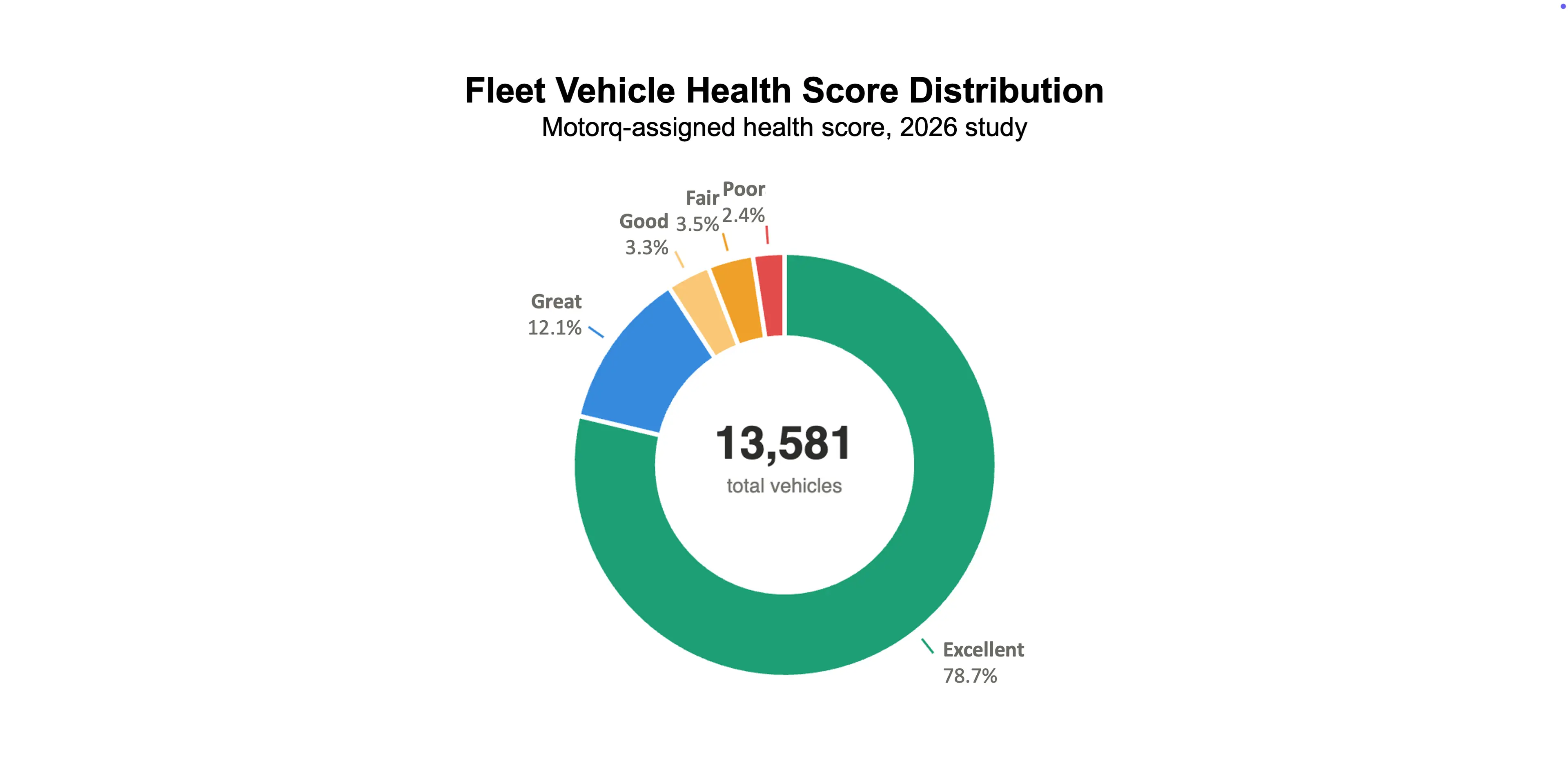
At Motorq, we analyzed 13,581 real fleet vehicles that are connected through our platform — Silverado 1500s, Silverado 2500HDs, and F-150s spanning model years 2018 through 2025 — using our vehicle health assessment. The assessment evaluates mechanical and electrical system performance using diagnostics generated by the vehicle over its lifetime, transmitted wirelessly from the vehicle's own onboard systems.
Nearly 80% of the fleet vehicles scored “Excellent.” Another 12% scored “Great.” The vast majority of fleet vehicles are in genuinely good mechanical shape. The market's baseline skepticism about fleet assets isn't supported by what the vehicles themselves are reporting.
But averages only tell part of the story.
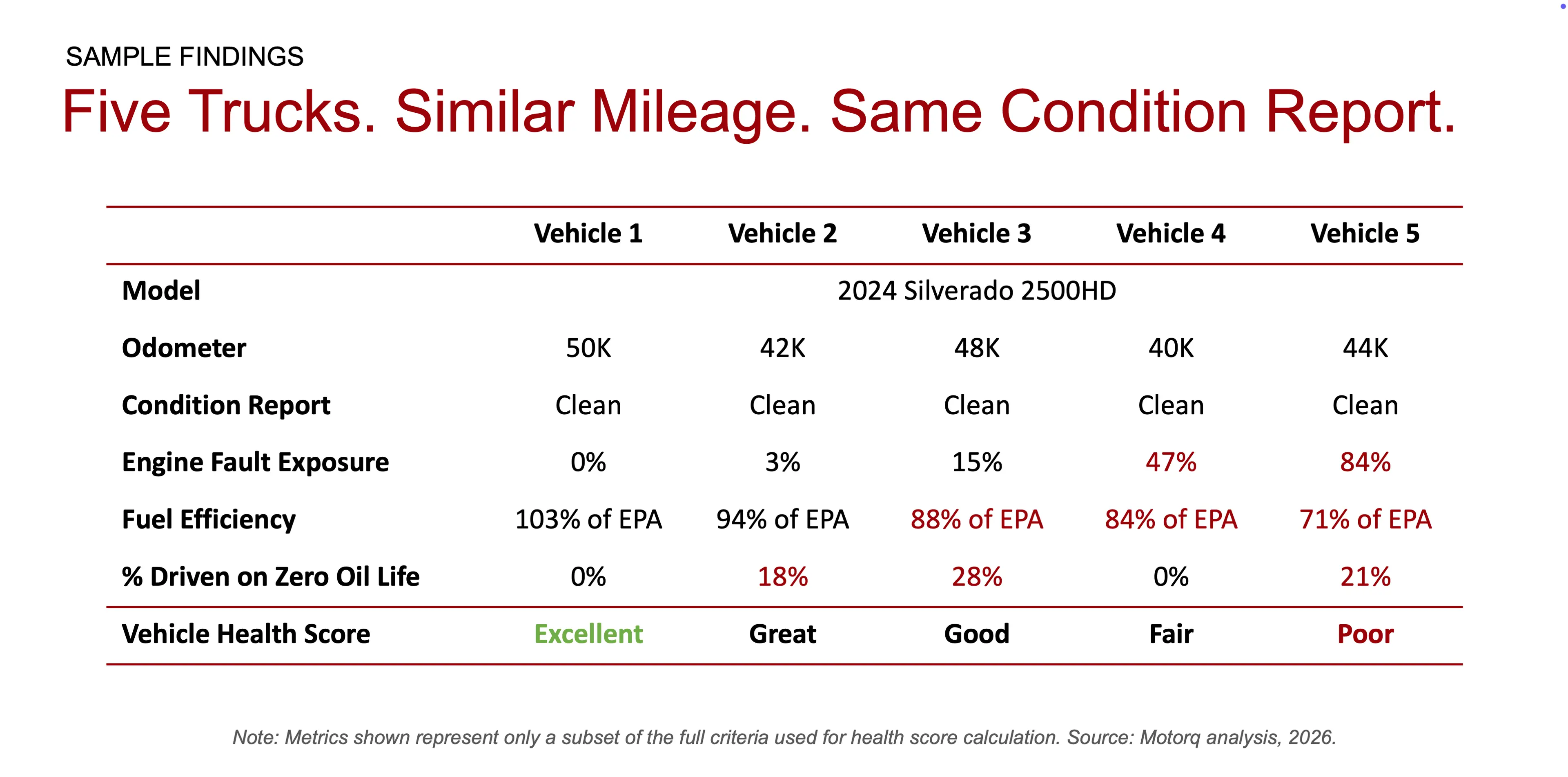
Five trucks. Same condition report. Not the same truck.
Take five 2024 Silverado 2500HDs from our dataset, all with similar mileage. All five came back with clean condition reports. By every conventional measure, these were comparable assets.
They weren't.
One key metric we look at is engine fault exposure, which is a composite measure of how severely and how frequently a vehicle's onboard diagnostic systems flagged mechanical issues over the observation period. Across these five trucks, that number ranged from 0% on the best vehicle to 84% on the worst. Fuel efficiency told the same story, with one truck performing near baseline and another generating only 71% of EPA spec. The percentage of miles driven on zero oil life, meaning the engine was running after the oil had fully degraded, swung from 0% to 28%.
Same condition report. Completely different mechanical realities, with no way for a buyer to know which was which.
That's the problem the market has never had a way to solve. Until now.
The infrastructure is already there
96% of new vehicles in the U.S. sold today come with OEM connectivity built in. While the average fleet may not yet be 96% connectable — depending on the average age and make/model composition — that share is increasing rapidly as older vehicles cycle out. Connected vehicle intelligence draws on data the vehicle has been generating throughout its operating life: engine diagnostics, efficiency patterns, fault history, maintenance indicators. This isn't an aftermarket device or a new layer of hardware. It's the vehicle reporting on itself, based on its own systems.
How does vehicle health data affect resale value at auction?
In tests conducted with auction partners, vehicles sold with a Motorq vehicle health certificate have seen 2 to 5% higher sale prices than comparable vehicles without one. On a $30,000 truck, that's $600 to $1,500 per unit. For a fleet or FMC cycling hundreds or thousands of units annually, that can add up quickly.
Few people willingly buy a house without a home inspection anymore. The inspection gives the buyer confidence and gives the seller proof of what they're selling. The absence of one signals something, even if nothing is technically wrong.
The core problem isn't that poorly maintained fleet vehicles exist. It's that the market has no way to tell them from the well-maintained ones — so it prices them the same.
For fleets that invested in proper maintenance, the evidence of that stewardship already exists. It's in the vehicle. Every diagnostic event, every efficiency reading, every oil life data point has been recorded and transmitted throughout the vehicle's operating life. It just hasn't been part of the transaction.
A vehicle health certificate changes that. It takes what the vehicle already knows about itself and makes it visible at the point of sale — giving buyers the confidence to price accordingly, and giving well-run fleets the return their maintenance programs deserve.
And one more point: unlike reconditioning or additional inspections, a vehicle health assessment adds nothing to the remarketing timeline. For fleet vehicles already enrolled in Motorq's platform, the data is there when you need it. The assessment happens in the background. The lane doesn't wait.
If you want to see how Motorq's vehicle health assessment works for your fleet, .