Why Rental Fleets Are Leaving Millions in Fuel Revenue on the Table (And How to Fix It)
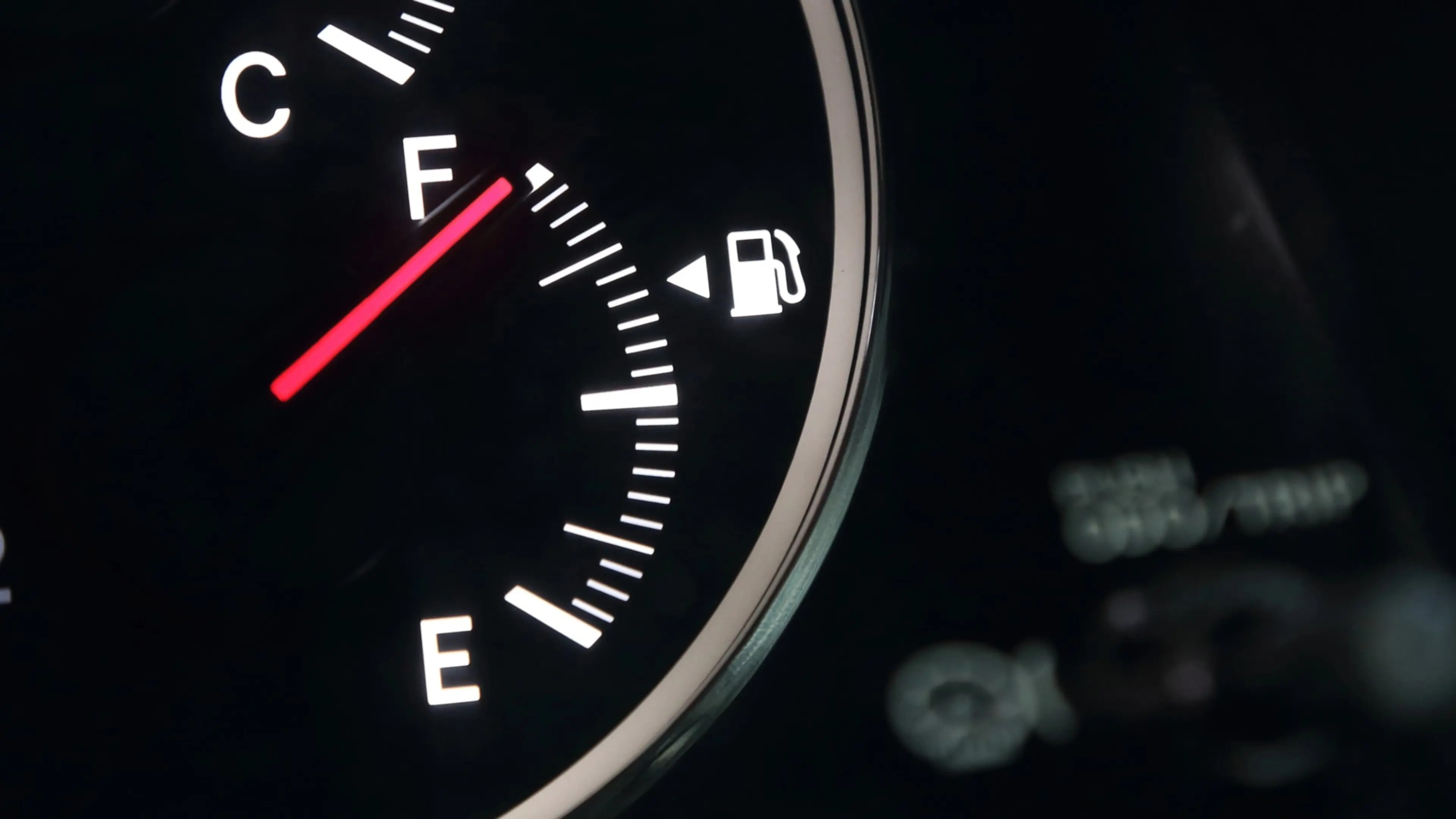
Rental operators already monitor fuel closely. But across large fleets and thousands of annual returns, small differences between displayed fuel readings and actual tank levels can quietly add up to meaningful uncollected revenue.
The gauge problem nobody talks about
Most consumer vehicles on rental lots still rely on a resistive float sensor inside the fuel tank. The sensor rises and falls with the fuel level, creating a system that is simple, reliable, and cost-effective for everyday driving, but not designed for precision billing.
In many vehicles, the dashboard gauge is intentionally calibrated to provide stable, easy-to-read fuel indications for drivers. As a result, the displayed reading can sometimes overstate the actual fuel level, especially near the top of the tank where many rental returns are evaluated.
That means a vehicle can appear “full” on the dashboard while still being meaningfully below a true full tank.
Motorq’s internal fuel measurement testing shows that, across vehicle makes and models, more than 40 miles worth of fuel can go unreported during a single fill-up.
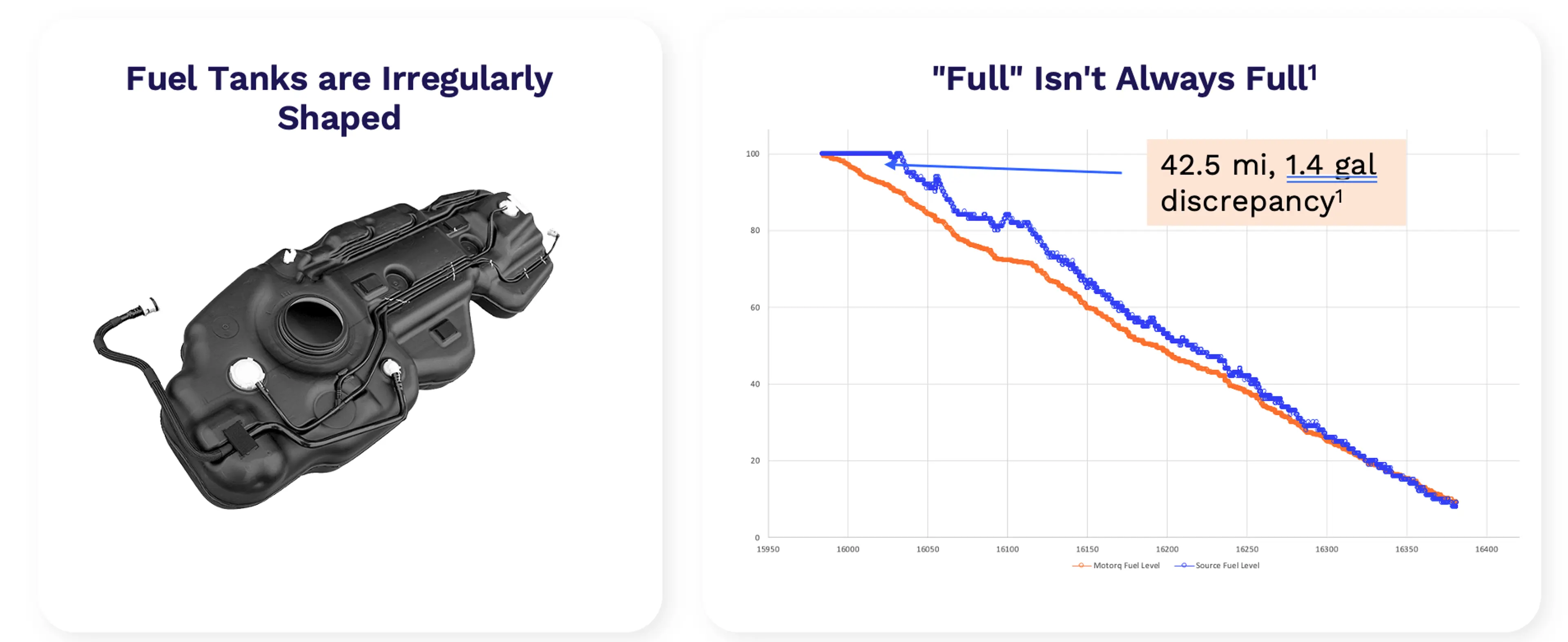
A 2024 Hyundai Palisade reported a “full” tank (blue line), but the fuel level didn’t start dropping until 42.5 miles into the trip. Motorq’s normalized estimate (orange) shows fuel consumption from the start, highlighting a 1.4-gallon discrepancy.
Small per-return. Enormous at scale.
In high-turn rental environments, vehicles may cycle through dozens of returns annually, creating significant cumulative exposure to small fuel billing discrepancies.
If a fleet underbills by just one gallon per return, and fuel is billed at approximately $9 per gallon (using April 2026 national rental fuel pricing averages), the impact compounds quickly.
Nine dollars may not sound significant. But across a 5,000-vehicle fleet averaging roughly 50 returns per vehicle annually, that translates to more than $2.25 million in annual fuel revenue that was earned, delivered, and never collected.
See what that number looks like for your fleet

Fuel recovery and stolen vehicle losses, calculated for your fleet size.
What accurate measurement actually looks like
Motorq connects directly to vehicles through OEM-native connectivity with no hardware, installation, or downtime required.
Rather than relying solely on the dashboard fuel gauge reading, Motorq combines OEM vehicle data with proprietary algorithms that account for how fuel systems behave across different makes and models. This allows Motorq to generate a more accurate estimate of actual tank level than the standard in-vehicle display alone.
A leading global rental car company uses Motorq’s OEM-connected fuel calibration models to automate fuel validation and vehicle returns across thousands of locations and multiple vehicle brands. Read the case study
In the vehicle management view above, each vehicle displays a precise fuel reading, whether 29.2%, 88.3%, or 90.9%, updated in real time across manufacturers like Jeep, Toyota, Chevy, and others.
The result is fuel measurement that stays within roughly 5% of actual tank level across varying vehicle types, return conditions, and fleet sizes. That gives rental operators a far more reliable basis for fuel billing without changing return workflows or counter operations.

Motorq collects fuel data directly from each vehicle and applies advanced calibration to deliver an accurate, billable fuel level at every return.
The broader point
For the first time, rental fleets can remotely see the actual fuel level of every vehicle in real time without sending someone to walk the lot or manually check gauges.
At every return, that same data is instantly available for billing.
This is possible because the vehicle itself is now the source of truth. And that changes what rental operators can see, track, recover, and ultimately control across their fleets.
Book a demo with the Motorq team.