Hardware-Free Fleet Telematics: How A Fortune 100 Telecom Is Replacing Devices Across 15,000 Vehicles
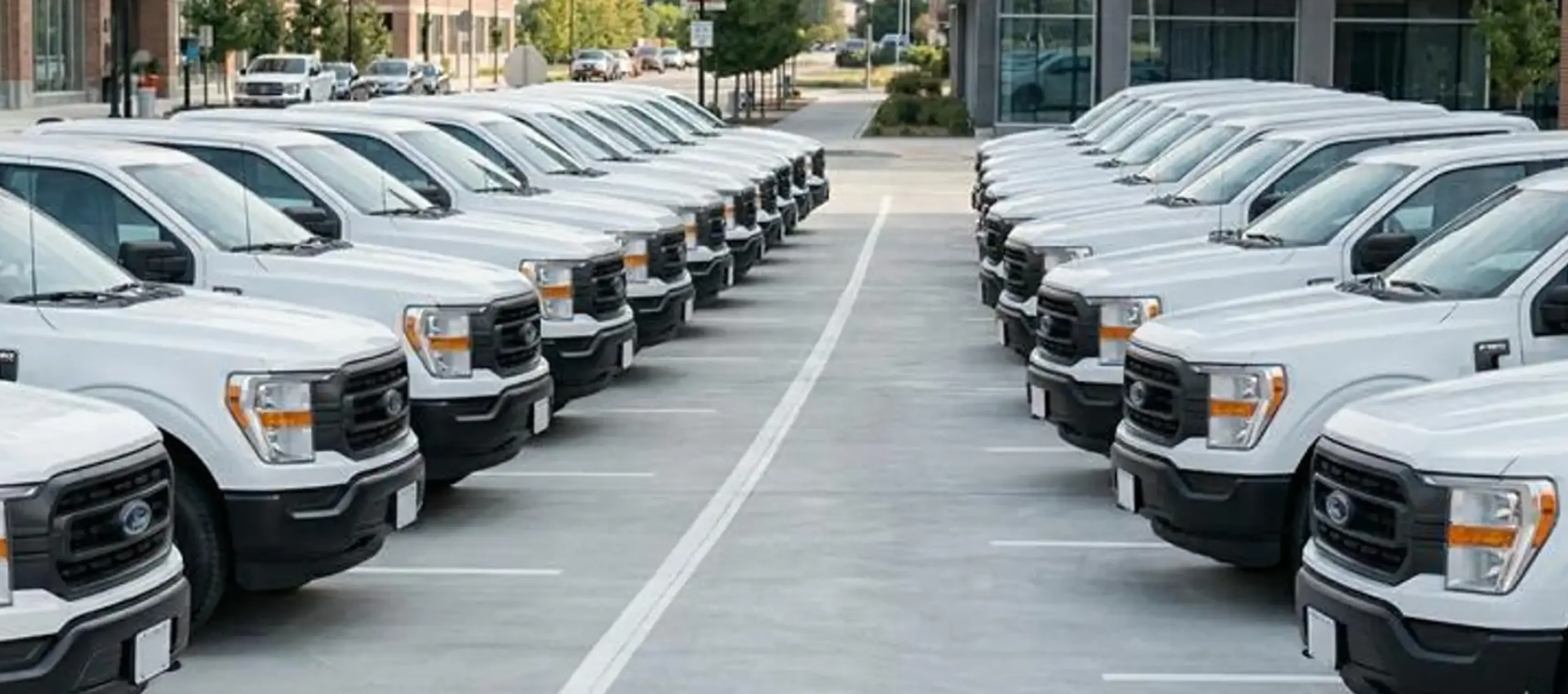
For most fleets, switching telematics providers means a hardware project. New devices to procure, schedule across thousands of vehicles, install, and eventually replace.
For a Fortune 100 telecom managing tens of thousands of vehicles, that wasn't a viable path. They needed to exit a long-standing vendor contract, keep every downstream system running without modification, and do it with a fully software-based approach. That's what hardware-free fleet telematics made possible.
The Hidden Cost of Hardware-Dependent Telematics
When one of America's largest telecom companies decided to exit a long-standing contract with a major telematics provider, the stakes were significant. Their fleet of tens of thousands of vehicles was embedded in internal systems that field managers, logistics teams, and downstream applications all depended on daily. Replacing the provider without disrupting those systems required precision and continuity across every workflow.
Their existing data pipeline was built around a specific event format from their legacy provider. Any new solution needed to match that structure exactly to keep internal tools running without interruption. Most telematics vendors couldn't offer that. The ones that could required hardware installations across the entire fleet, adding cost, complexity, and time they didn't have.
What They Were Trying to Solve
Telematics played a central role in daily fleet operations across three critical areas:
Driver safety. With 15,000+ drivers representing the company's brand on public roads, they needed reliable data on speeding, hard braking, hard acceleration, and seatbelt use. Unsafe drivers were flagged, put on notice, and in recurring cases, placed on probation. The integrity of that scoring system depended entirely on the quality and consistency of the underlying data.
Fleet tracking. Field managers needed real-time location for every vehicle, confirmation that vehicles returned to base each night, and visibility into usage outside approved hours or routes. For an organization this size, unauthorized use and trip auditing required constant attention.
Vehicle health. With a fleet this large, a single wave of unplanned breakdowns can ground dozens of drivers and cascade into missed service windows. Visibility into oil life, tire pressure, DTCs, and service alerts enabled proactive maintenance planning, vehicle staging, and uninterrupted driver activity.
How Hardware-Free OEM Data Solved the Problem
Motorq eliminated the need for hardware by pulling data directly from Ford, GM, and Stellantis. This removed the cost and operational burden of device installation across the fleet.
Rather than asking the telecom to adapt to a new data format, Motorq built a custom real-time data stream that mirrored their existing structure, mapping event codes to match their legacy schema so downstream systems required zero modification. Other vendors asked the customer to change; Motorq changed to fit the customer.
Before a single production vehicle was enrolled, both teams ran a structured pilot to validate data accuracy across Ford and GM vehicles. The telecom’s engineering team validated data completeness, latency, and accuracy to ensure production readiness.
What Hardware-Free Telematics Delivered at Scale
With no hardware to install and data flowing in a familiar format, the rollout moved quickly. Motorq connected the fleet to Ford, GM, and Stellantis OEM data streams, feeding location, driver behavior, and vehicle health signals into the telecom's existing fleet management UI.
Where previously their teams relied on aftermarket device data with known gaps, they now had OEM-grade signals with higher coverage and reliability. Driver behavior scoring, which had been inconsistent across vehicle types, became more uniform as events came directly from the vehicle rather than a mounted device. Fleet managers gained confidence in the data they were acting on.
The telecom's engineering team integrated Motorq's enrollment APIs directly into their internal systems, replacing manual fleet operations with an automated, self-service workflow that scaled without adding headcount.
The relationship later expanded to include EV battery and charging signals, fuel exception monitoring, and in-vehicle coaching, extending Motorq's role from data supplier to core operational infrastructure.
Results
The telecom enrolled 2,000 vehicles in its first month of production and has since grown to over 15,000 enrolled vehicles, with volume continuing to grow as it completes its cutover from the legacy provider.
The operational impact extended well beyond scale:
- Eliminated hardware costs across the fleet by switching to OEM-native data, with no devices to procure, install, or maintain
- Zero internal rearchitecting required, thanks to Motorq's custom data stream matching the legacy provider's format exactly
- Improved driver behavior scoring consistency as OEM-sourced events replaced aftermarket device signals, reducing data gaps across vehicle types
- Reduced manual fleet operations overhead through direct API integration, enabling automated, self-service enrollment and management at scale
- Expanded platform footprint to include EV readiness, fuel exception monitoring, and in-vehicle coaching, consolidating multiple use cases under a single data provider
A telematics replacement became the foundation for how this company manages one of the largest corporate fleets in the country.