The New Repossession Wave: Why Auto Lenders Need Better Vehicle Location Data
Repossessions are rising again. For auto lenders, that means a core operational weakness is getting more expensive: too many teams still cannot quickly locate the vehicle securing the loan.
This is no longer a future problem. It is a 2026 operating problem. Repossession volumes are elevated, loan balances remain high, and borrower stress is still visible across the market. In 2024, about 1.73 million vehicles were repossessed in the U.S. but by Q3 2025, RDN reported more than 2.5 million unique repossession assignments in a single quarter. At the same time, Fitch data showed subprime 60-day auto delinquencies hitting record highs in late 2025.
Those numbers matter because repossession is not just a collections event. It is an asset recovery problem. Auto loans are secured by moving collateral. If a lender cannot locate that collateral quickly, skip costs rise, recovery timelines stretch, and loss severity gets worse.
Key takeaways from this article
- Auto repossessions are rising again in the U.S., driven by higher loan balances, longer loan terms, and increasing borrower delinquencies.
- Locating vehicles quickly has become one of the biggest operational challenges for auto lenders, because vehicles are mobile collateral and traditional recovery tools are often reactive.
- Recovery delays increase costs and loss severity, especially as repossession assignments increase and recovery timelines stretch.
- Connected vehicle data from OEM-connected vehicles can help lenders identify likely vehicle locations, giving recovery teams stronger starting points when locating collateral.
- Improving collateral visibility helps lenders prioritize repossession assignments, reduce wasted field effort, and shorten time-to-recover vehicles.
The real problem is collateral visibility
When a borrower misses payments, lenders need to answer a basic question fast: where is the vehicle now?
That sounds simple. In practice, it often is not.
Traditional recovery workflows still depend on skip tracing, borrower outreach, plate reader networks, field visits, and fragmented third-party data. Those tools can help, but they are reactive. They also lose value as time passes. A stale address creates wasted field effort. A missed lead means another call, another assignment, another day of waiting. If the vehicle moves again, the recovery team starts over.
That friction matters more in today’s lending environment. According to Experian, average loan amounts have climbed to $43,582 for new vehicles and $27,528 for used vehicles. Average monthly payments reached $767 for new vehicles and $537 for used vehicles. Nearly 30% of new vehicle loans and 28.68% of used vehicle loans carried 73- to 84-month terms.
For lenders, that means more dollars at risk per asset, for longer periods of time. Recovery delays are no longer just an operations nuisance. They are a portfolio performance issue.
The old recovery model is too slow for today’s risk environment
The older repo model was built for a different market. Loan balances were smaller and term lengths were shorter, so lenders could tolerate more friction in the field.
That is no longer true.
Today, lenders are operating in a market where borrower stress is as high as ever. Experian reported that subprime borrowers accounted for 15.3% of total vehicle financing in Q4 2025. 30-day delinquencies rose to 2.5% and 60-day delinquencies rose to 1.0%.
And when an account is assigned for repossession, completion is not instant. CFPB data shows the average time from assignment to completion ranged from 15.9 days for super-prime borrowers to 23.1 days for subprime borrowers. That is a meaningful window for the vehicle to move, accrue storage costs, or lose market value.
Why every day matters more now
The cost problem is not theoretical.
The CFPB’s repossession research shows that average repossession costs can run around $350, while regulators also found cases where servicers charged estimated fees as high as $1,000. The agency also found that average costs charged to consumers were higher when lenders used forwarders .
The same CFPB data adds another important point: assignment rates rose above pre-pandemic levels, but completion rates got worse. In September 2022, only 27% of accounts assigned to repossession were completed, down from 38% in September 2019. That means more assigned accounts were sitting in process without resolution.
For lenders, that combination is painful. More volume. Longer timelines. More operational handoffs. More risk that a recoverable asset becomes harder and more expensive to recover.
Better vehicle location data changes the economics of recovery
The industry now has a more practical way to close this gap. Most lenders do not need more manual work. They need better source data.
Modern vehicles already generate location and status data through connected car systems natively installed in the vehicles. That data can show where a vehicle was last seen and how recently it moved. It can also be analyzed to predict where it will likey be at any given time. When handled correctly and within the right permissions and compliance framework, that changes recovery from a blind search into a more informed workflow.
For example, if a vehicle appears to return to the same residential area overnight, recovery teams can prioritize that assignment rather than starting with a broad field search.
That shift matters because speed matters. Better collateral visibility reduces uncertainty in a higher-volume repo environment. The benefit is shorter time-to-locate, lower skip costs, and stronger productivity.
This is a meaningful change from legacy plug-in GPS approaches. Aftermarket devices can help in some environments, but they add hardware cost, installation friction, battery issues, and inconsistent coverage. Native OEM systems work differently. They rely on embedded modems that >96% of new North American vehicles already have, allowing lenders to access vehicle signals without having to install or maintain specialized devices.
Why lenders should act now
Repossession pressure is rising, and loan balances remain high. When that much capital is tied to a single asset, recovery delays carry real financial consequences.
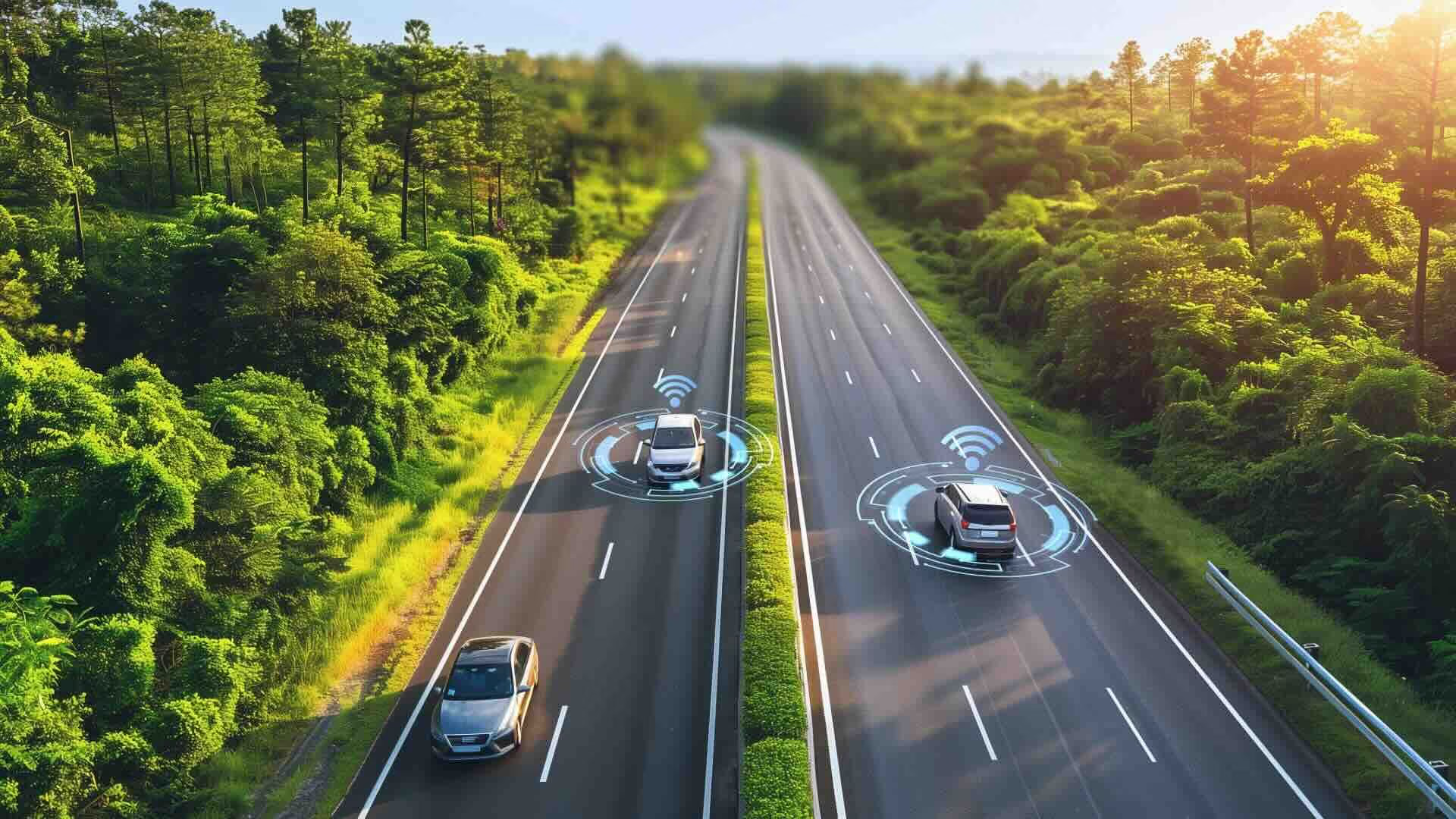
At the same time, vehicles themselves are becoming better sources of operational data. Many modern vehicles already transmit location and status signals through OEM connected vehicle systems. The same connectivity fleets use to monitor vehicles can also help lenders locate and recover collateral more efficiently.
For lenders, two operational changes matter most.
First, recovery teams need reliable vehicle signals from OEM-connected vehicles so they can identify likely locations and prioritize assignments. Instead of starting every recovery with skip tracing and field searches, teams can begin with a stronger lead.
Second, that vehicle data needs to flow directly into recovery workflows. Collections teams, forwarding partners, and recovery vendors should be working from the same information when deciding where to send agents and which assignments to prioritize.
This is where solutions like Motorq’s Vehicle Recovery Console helps.
Motorq connects OEM vehicle data directly into lender recovery workflows. That gives recovery teams a faster starting point when locating vehicles, reduces wasted field effort, and helps prioritize assignments.
Watch video: https://www.youtube.com/watch?v=kbIfWB7z2n8
The console shows recovery teams where vehicles were last seen, highlights likely recovery locations based on recent vehicle activity, and helps prioritize which assignments agents should pursue first. Instead of starting with broad searches, teams can begin with a clearer signal about where the vehicle is most likely to be found.
The lenders who fix this first will have an advantage
The repossession wave is real. But the deeper shift is operational.
For years, lenders had limited visibility into their collateral. That is starting to change. Connected vehicle data gives recovery teams a faster way to locate vehicles, prioritize assignments, and reduce wasted field effort.
In a higher-risk lending environment, collateral visibility is no longer optional. It is a real operational advantage. The lenders who adopt this first will remove friction where it matters most: time-to-locate, time-to-recover, and avoidable loss.
If you want to see how this works in practice, request a demo to explore how Motorq connects vehicle data to lender recovery workflows.


See what connected vehicles can do
OEM connectivity brings visibility without added hardware costs. Meet with a Motorq expert and see how connected vehicle intelligence can support your business.